For inquiries about our products or pricelist, please leave your email to us and we will be in touch within 24 hours.
When you're looking to get the most out of your golfing adventures, having a dependable golf cart battery is pretty much a must. The right one not only keeps your cart running smoothly but also helps it last longer over time. With so many options out there, choosing the perfect battery can feel a bit overwhelming—no joke. Whether you're just having fun on the weekends or hitting the course regularly, it's really important to understand the different types of golf cart batteries so you can pick what works best for your style and needs.
In this guide, I’ll walk you through the top 10 golf cart batteries out there. We’ll look at what makes each one special—the features, the perks, and what sets them apart. From traditional lead-acid batteries to newer lithium-ion ones, each kind offers its own benefits, depending on how and where you play. My goal? To give you the lowdown so you can pick the battery that’ll give you top performance, last longer, and help you feel confident as you cruise around the greens.
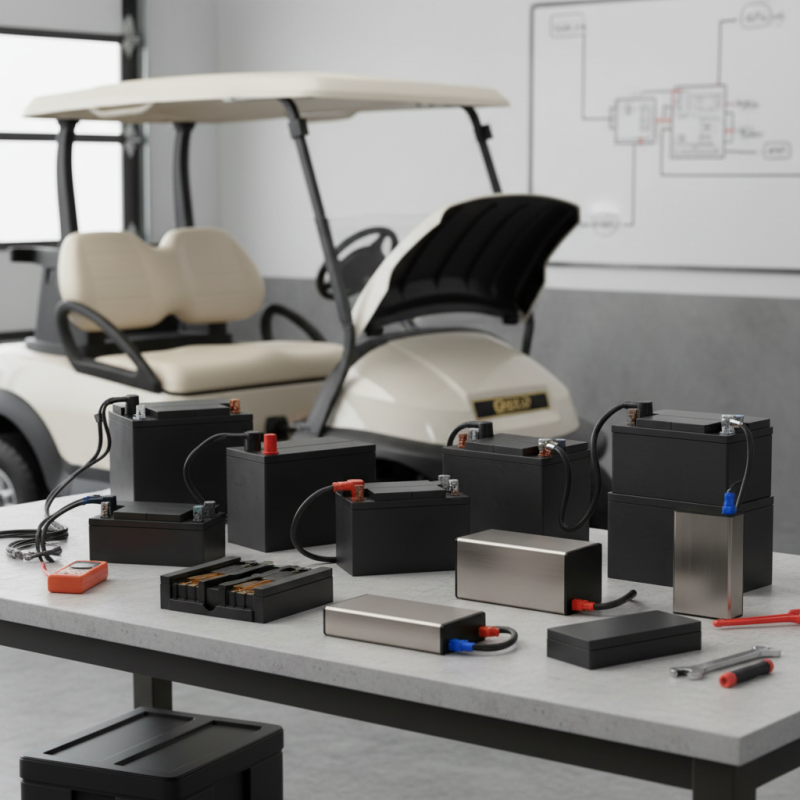
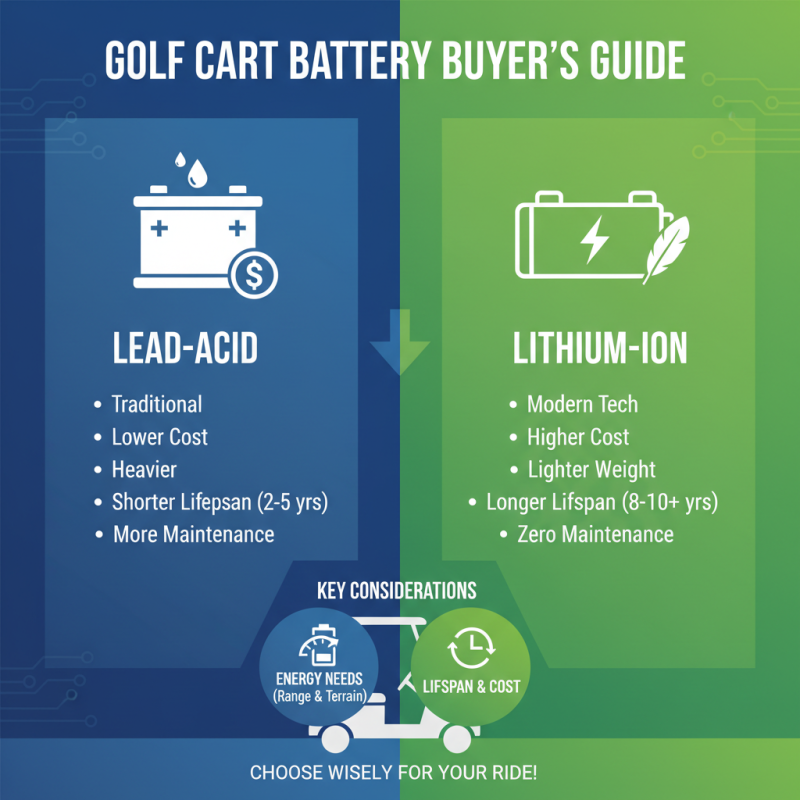
When selecting the right battery for your golf cart, understanding the different types available is essential. There are primarily two types of batteries commonly used in golf carts: lead-acid and lithium-ion. Lead-acid batteries are the traditional choice, known for their affordability and reliability. They come in two forms: flooded lead-acid and sealed lead-acid (AGM). Flooded lead-acid batteries require maintenance, including regular water checks and equalization charges, whereas Agm Batteries are maintenance-free, making them a more convenient option for some users.
On the other hand, lithium-ion batteries are gaining popularity due to their advanced technology and performance benefits. These batteries are lighter, have a longer lifespan, and charge faster than lead-acid batteries. They also offer a higher energy density, meaning they can store more power in a smaller package. Although initially more expensive, the longevity and efficiency of lithium-ion batteries can make them a cost-effective solution in the long run. When choosing the best battery for your golf cart, consider factors such as usage frequency, budget, and performance needs to determine which type aligns best with your requirements.
When selecting golf cart batteries, several key features should be taken into consideration to ensure that you choose the best option for your needs. First and foremost, the type of battery is crucial. While lead-acid batteries are traditional and cost-effective, lithium-ion batteries are rapidly gaining popularity due to their longer lifespan and lighter weight. Understanding the energy requirements of your golf cart will help you determine which battery type is most suitable for your driving habits and terrain.
Another important factor to evaluate is the battery capacity, measured in amp-hours (Ah). A higher capacity indicates longer running time before needing to be recharged. It's essential to consider how often you use your golf cart and for how long, as this will directly influence your choice of capacity. Additionally, pay attention to the battery’s discharge rate, which affects how efficiently it can deliver power during use. Lastly, ensure you check the warranty offered; a longer warranty can be indicative of the manufacturer’s confidence in their product's durability and performance. By assessing these key features, you can make an informed choice that aligns with your individual golf cart needs.
When it comes to finding the best golf cart batteries, performance and reliability are paramount. According to a report by the Battery Council International, the average lifespan of a golf cart battery ranges between 4 to 6 years, depending largely on usage and maintenance. The right battery can enhance your golf cart's efficiency, ensuring that it performs well on the course or on errands around your community.
One important factor to consider is the type of battery chemistry. Lead-acid batteries remain the most common choice due to their affordability and proven track record. However, lithium-ion batteries are increasing in popularity, offering longer lifespans, quicker charging times, and less maintenance. Research indicates that lithium-ion batteries can last up to 10 years, making them a worthwhile investment for those who frequently use their golf carts.
Tips: Regular maintenance, such as checking water levels and cleaning terminals, can extend the lifespan of lead-acid batteries significantly. Additionally, always ensure that your battery is appropriately charged; for optimal performance, it's best to recharge your battery after each use. Consider investing in a battery monitor to help track usage and battery health, which can prevent unexpected failures and ensure reliability on the course.
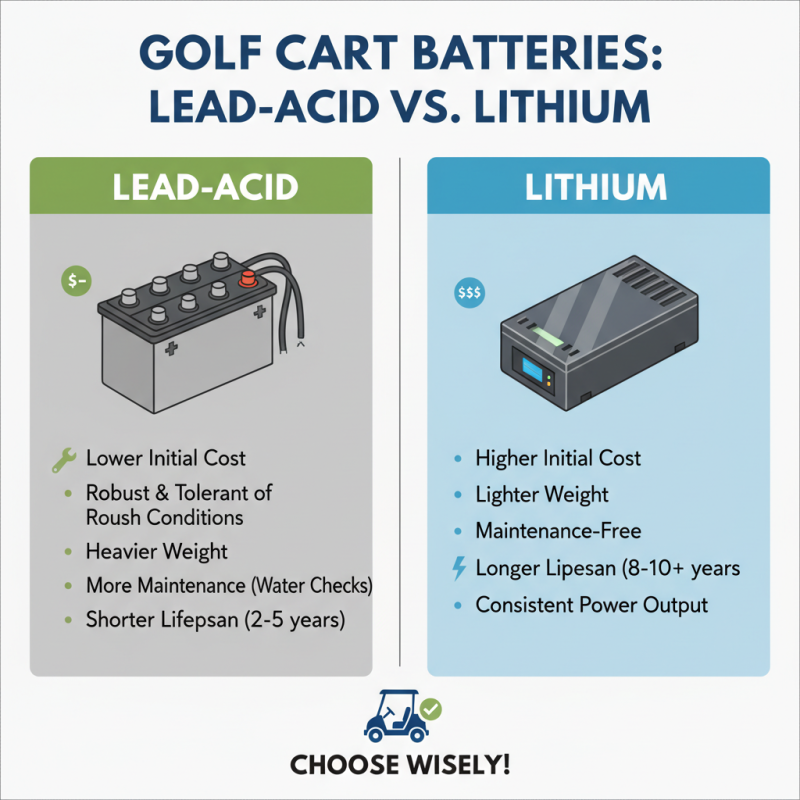
When it comes to choosing golf cart batteries, understanding the differences between lead-acid and lithium options is crucial. Lead-acid batteries have been a traditional choice for many years. They are generally more affordable upfront and robust, capable of handling rough conditions. However, they tend to be heavier and require more maintenance, such as regular water checks and equalizing charges. Their lifespan is also significantly shorter compared to lithium batteries, often requiring replacement every few years, especially with frequent use.
On the other hand, lithium batteries are gaining popularity in the golf cart world due to their numerous advantages. Although the initial investment is higher, lithium batteries offer a longer lifespan and greater efficiency. They are lighter, which can enhance the overall performance and range of the golf cart. Additionally, lithium batteries require minimal maintenance and do not necessitate water checks. Their discharge rate is superior, allowing for more consistent power delivery and quicker charging times. As users weigh these options, considering factors such as cost, maintenance, and performance will help them find the best battery fit for their golf cart needs.
To ensure the longevity of your golf cart batteries, proper maintenance is essential. One of the most critical steps is to regularly check the water levels in flooded lead-acid batteries. Keeping the electrolyte levels above the plates is crucial; if the water level drops too low, it can lead to sulfation and significantly shorten the battery's lifespan. It’s recommended to use distilled water for topping off, as this prevents contamination that can occur with tap water.
In addition to monitoring water levels, charging practices play a significant role in battery life. Always charge your batteries after every use, and avoid deep discharges, as they can cause permanent damage. It’s also important to ensure that the charger is compatible with your battery type and to charge them in a well-ventilated area to prevent overheating. Lastly, inspect the battery connections for corrosion and ensure they are clean and secure. Regular maintenance will help keep your golf cart batteries functioning optimally and extend their overall life.
When selecting the right golf cart battery, charging and storage are critical factors that can greatly influence battery lifespan and performance. According to a report by the Battery Council International, regular maintenance and adherence to proper charging protocols can extend battery life by up to 30%. Most golf cart batteries should be charged after each use. Leaving them discharged for extended periods can lead to sulfation, a process that significantly reduces battery capacity and efficiency.
Tips for optimal charging include using smart chargers that automatically adjust the voltage and current to match the battery's needs, preventing overcharging which can damage batteries. Additionally, ensuring that the battery terminals are clean and free from corrosion can enhance connectivity and charging efficiency. Regularly checking the electrolyte levels in flooded lead-acid batteries is also advisable; maintaining them at the appropriate level ensures the batteries can function correctly and prolongs their lifespan.
Storage conditions play a crucial role as well. It’s essential to store golf cart batteries in a cool, dry place to prevent thermal degradation. The National Renewable Energy Laboratory recommends keeping batteries at temperatures between 50°F and 80°F. If batteries are stored for an extended period, it is beneficial to charge them to about 50% capacity before storage and check them monthly to maintain their health. Following these guidelines can result in better performance and longevity, allowing golfers to enjoy hassle-free experiences on the course.
When considering the costs associated with purchasing a golf cart battery, it's essential to evaluate various factors to budget effectively. Golf cart batteries can vary significantly in price, depending on the type, size, and capacity. While lead-acid batteries are usually the more economical choice with a lower upfront cost, they often require more frequent replacements compared to lithium-ion options. Potential buyers should consider the long-term investment; a higher initial outlay for a lithium battery may result in lower replacement and maintenance costs over time.
Additionally, it's crucial to factor in installation and any necessary accessories that may accompany the battery purchase. A professional installation can incur additional charges, so understanding the total cost is vital. Moreover, considering warranty options can help mitigate costs related to unexpected failures. Budgeting for your golf cart battery needs involves not just the purchase price but also understanding lifecycle costs, which include upkeep and potential upgrades. Planning ahead ensures that you choose a battery that fits both your current usage needs and your financial considerations.
: The two main types of batteries used in golf carts are lead-acid and lithium-ion.
Lead-acid batteries are known for their affordability and reliability. They come in two forms: flooded lead-acid, which requires maintenance, and sealed lead-acid (AGM), which is maintenance-free.
Lithium-ion batteries are gaining popularity due to their advanced technology, lighter weight, longer lifespan, faster charging times, and higher energy density.
The average lifespan of a golf cart battery ranges from 4 to 6 years, but lithium-ion batteries can last up to 10 years.
Flooded lead-acid batteries require regular maintenance, which includes checking water levels and performing equalization charges.
Regular maintenance, such as checking water levels, cleaning terminals, and ensuring the battery is charged after each use, can help extend its lifespan.
A battery monitor can help track usage and battery health, preventing unexpected failures and ensuring reliable performance.
Yes, you can switch from lead-acid to lithium-ion batteries, but you should consider compatibility and any necessary modifications to your golf cart.
While lithium-ion batteries may have a higher upfront cost, their longevity and efficiency can make them a cost-effective solution in the long run.
When choosing a battery, consider usage frequency, budget, performance needs, and the type of battery chemistry that best suits your requirements.
When selecting the best Golf Carts Battery, understanding the various types available is crucial. This article outlines key features to consider, such as capacity, lifespan, and maintenance requirements. It reviews the top 10 golf cart batteries, highlighting their performance and reliability, while also comparing lead-acid and lithium options to help users make an informed decision.
Additionally, the article provides maintenance tips to extend the battery's life, as well as guidelines for charging and storage to ensure optimal performance. A cost analysis is included to assist in budgeting for golf cart battery needs, making it essential reading for anyone looking to power their golf carts effectively.