Picking out the right sealed rechargeable battery for your gadgets isn't exactly a walk in the park. I mean, they’re pretty handy and can save you a bunch of hassle, but with so many options out there, it’s easy to get overwhelmed. Seriously, scouring reviews and specs can feel like a full-time job!
Think about what your device really needs—things like capacity, voltage, and size. Some batteries might last forever, but performance isn’t always consistent, you know? Brands like Energizer and Varta tend to have some reliable picks, but don’t assume every product will blow you away; sometimes they just don’t live up to the hype.
My tip? Take a few minutes to read through customer reviews. Hearing what others have experienced can totally help you avoid ending up with a dud. A good battery should keep things running smoothly for a long time without constantly having to replace it. At the end of the day, finding the perfect sealed rechargeable battery is about balancing what you need with what’s on the market—and maybe a little bit of patience too.
Understanding Different Types of Sealed Rechargeable Batteries Available in the Market
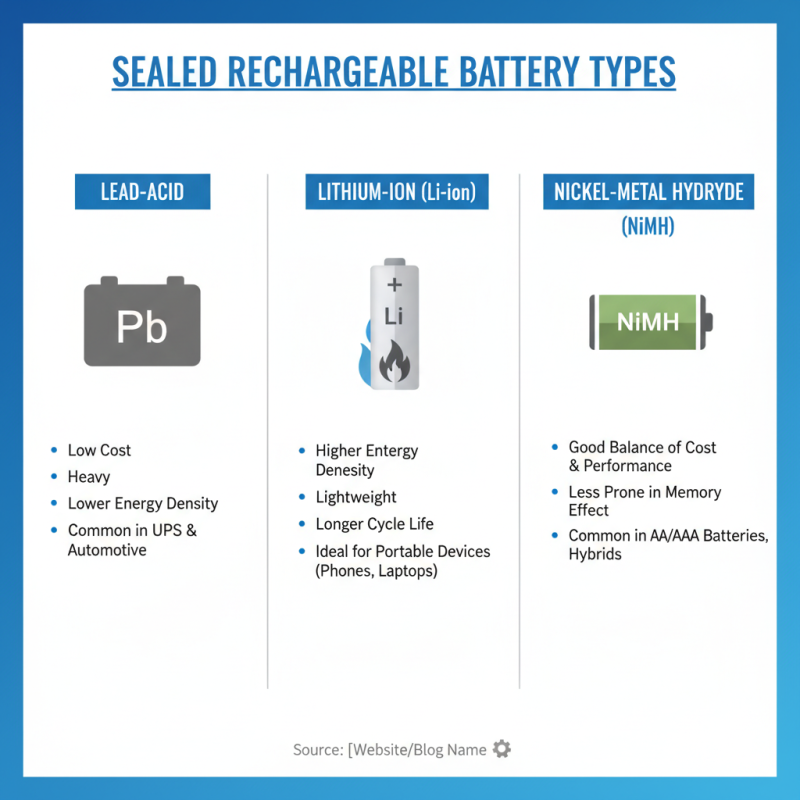
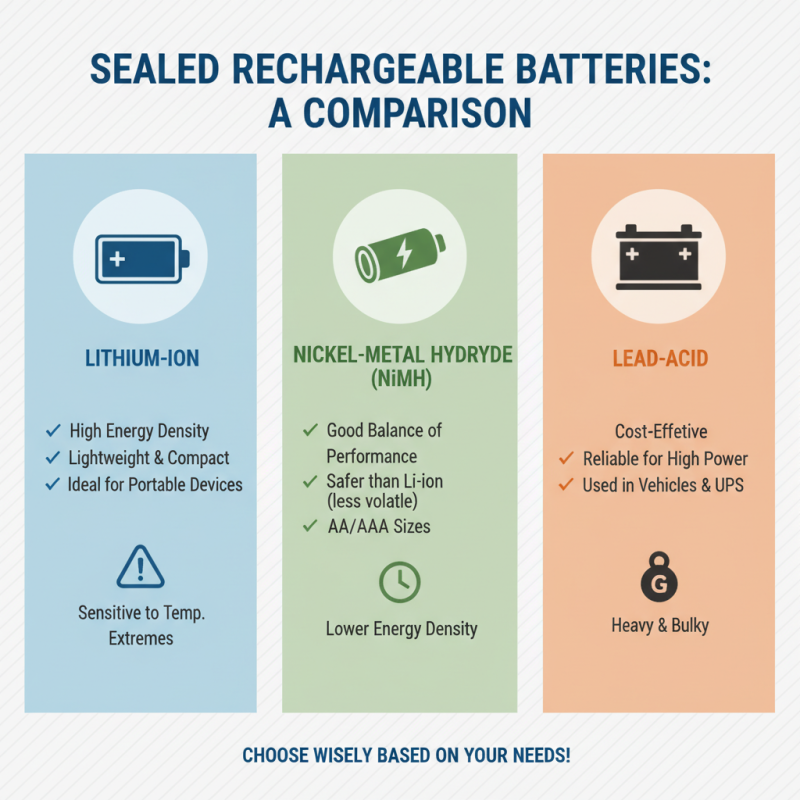
When selecting a sealed rechargeable battery, it’s crucial to understand the types available. The most common types are lead-acid, lithium-ion, and nickel-metal hydride (NiMH). Each type has distinct characteristics. Lead-acid batteries are widely used due to their low cost, but they are heavy and less efficient. Lithium-ion batteries, on the other hand, are lighter and offer higher energy density, making them ideal for portable devices.
Data shows that lithium-ion batteries accounted for approximately 80% of the rechargeable battery market in recent years. Their lifespan typically exceeds 2,000 cycles, which is significantly higher than that of lead-acid batteries, which range from 200 to 1,000 cycles. However, lithium-ion batteries can be sensitive to temperature changes, potentially leading to performance issues in extreme conditions.
NiMH batteries bridge the gap between lead-acid and lithium-ion options. They are reasonably priced and safer than lithium-ion batteries. However, they have a lower energy density and can suffer from memory effect, affecting their performance over time. It's essential to weigh these advantages and disadvantages based on your specific needs. The choice of battery type should align with your application demands, environmental conditions, and budget constraints.
Key Factors to Consider When Selecting a Sealed Rechargeable Battery
Choosing the right sealed rechargeable battery can be challenging. Key factors play a vital role in making the best decision. Capacity is one of the most important elements. It indicates how much energy the battery can store. For example, batteries with higher capacity last longer. A capacity around 2000 to 3000 mAh is common for many devices.
Another factor to consider is the discharge rate. It tells you how fast the battery releases energy. Some applications require a higher discharge rate. For instance, power tools need immediate energy for better performance. Reports indicate that batteries with a discharge rate of 2C to 5C perform well for demanding tasks.
Furthermore, the cycle life is crucial for longevity. This measures how many times a battery can be charged and discharged before performance drops. Quality batteries often offer 500 to 1000 cycles. Lower quality options, however, may struggle after only 300 cycles.
When selecting a battery, think about its application. Practical needs may mean you have to sacrifice some performance for cost or size. It’s a balancing act of priorities.
Comparing Lithium-Ion, Nickel-Metal Hydride, and Lead-Acid Batteries
When selecting a sealed rechargeable battery, it’s essential to understand the differences between Lithium-Ion, Nickel-Metal Hydride, and Lead-Acid batteries. Lithium-Ion batteries are popular due to their high energy density. They are lightweight and compact, making them ideal for portable devices. However, they can be sensitive to temperature changes, leading to performance issues in extreme conditions. Consider this aspect when making your choice.
Nickel-Metal Hydride batteries offer a great balance between performance and cost. They tend to last longer than their lithium counterparts in some applications. Still, they have a lower energy density. These batteries are robust and can endure a higher number of charge cycles. On the flip side, they are bulkier and have a slower self-discharge rate.
Lead-Acid batteries are often used in larger applications. They are reliable and relatively inexpensive. The downside is their weight and size; they can be cumbersome. Additionally, they require regular maintenance to ensure longevity. Reflect on your specific needs. If portability is key, Lithium-Ion might be best. For cost-effective solutions, consider Nickel-Metal Hydride or Lead-Acid options.
Analyzing Battery Capacity and Its Importance for Your Applications
When selecting a sealed rechargeable battery, understanding capacity is critical. Battery capacity determines how long your device can run. It is often measured in milliampere-hours (mAh). A higher mAh rating usually means more power and longer usage times. For example, a device needing 1000 mAh will last longer with a 2000 mAh battery.
However, capacity isn’t the only factor. The energy draw of your device affects performance. If your device consumes power quickly, even a high-capacity battery may drain fast. This is a common issue. Users tend to overlook how power-hungry certain applications can be. It is essential to research how your specific application impacts battery life.
Additionally, environmental factors play a role. Temperature extremes can affect battery efficiency. When choosing a battery, reflect on where and how you will use it. Will it be in a cold garage or a warm attic? Ultimately, your needs might be different from someone else’s. Understanding these nuances can help you make a better decision. You could choose the wrong battery—based only on specs—and end up frustrated. Pay attention to the details.
How to Choose the Best Sealed Rechargeable Battery for Your Needs?
| Battery Type | Voltage (V) | Capacity (mAh) | Max Discharge Rate (C) | Cycle Life | Use Case |
| Lithium-ion | 3.7 | 2000 | 1C | 300-500 | Smartphones, Laptops |
| NiMH | 1.2 | 2500 | 2C | 500-1000 | Cameras, Power Tools |
| Lead Acid | 12 | 7000 | 0.5C | 200-300 | Backup Systems, UPS |
| LiFePO4 | 3.2 | 3000 | 3C | 2000-5000 | Electric Vehicles, Solar Storage |
Evaluating Charge Cycles and Lifespan for Long-Term Use
When selecting a sealed rechargeable battery, understanding charge cycles is crucial. A charge cycle is not just a full discharge and recharge. Instead, it may involve partial discharges. Each battery has a specific cycle life. Typically, it ranges from 300 to 2000 cycles. If you frequently use the battery, a longer lifespan is essential.
Looking deeper into lifespan, temperature and usage patterns matter. High temperatures can shorten battery life. Continual deep discharges also stress the battery. Are you using the battery in a suitable environment? It’s a question to ponder. Regular check-ups can help.
Do some research on maintenance tips. Simply charging only when necessary prolongs battery health. Avoid leaving it plugged in for extended periods. This will help you maximize performance. Reflect on your usual charging habits. Small changes can lead to significant improvements. Prioritizing charge cycles and lifespan ensures better long-term investment.
Comparative Analysis of Sealed Rechargeable Batteries
This chart illustrates the average lifespan (in charge cycles) and total capacity (in mAh) of various sealed rechargeable battery types.
Safety Features and Ratings to Look for in Sealed Batteries
When selecting sealed rechargeable batteries, safety features are paramount. Look for batteries that include overcharge protection. This feature prevents battery failure and extends life. According to industry reports, batteries with this safety measure show a reduction in failure rates by up to 30%. This means greater reliability for your devices.
Another crucial rating to consider is the discharge rate. Batteries with higher discharge ratings can deliver power more consistently. It’s vital for applications like power tools or high-drain devices. A report from the Battery Safety Council noted that batteries with a discharge rate above 1C maintained performance longer under heavy usage.
Don't overlook the importance of certifications, like UL or CE. These labels indicate that the battery has been tested for safety and efficiency. However, it's essential to note that some manufacturers might present misleading information. Hence, always verify certification authenticity. Lastly, take time to assess your needs. A battery that is perfect for one application may not suit another.
Cost-Effectiveness and Eco-Friendliness of Various Battery Options
When it comes to rechargeable batteries, cost-effectiveness is a key factor. A study by the National Renewable Energy Laboratory indicates that lithium-ion batteries can cost about $137 per kilowatt-hour. This makes them an attractive option for consumers looking for performance without breaking the bank. However, it’s essential to note that prices can vary. Users must consider the initial investment versus the lifespan of the battery. A battery with a higher upfront cost may last significantly longer, reducing the overall long-term expenses.
Eco-friendliness is also crucial. According to research from the International Energy Agency, conventional batteries can have substantial environmental impacts. For example, lead-acid batteries can result in hazardous waste if not disposed of correctly. In contrast, newer technologies are emerging. Solid-state batteries, for example, offer lower environmental risks and improved efficiency. They are less likely to leak hazardous materials. However, the commercial availability of such options may still be limited. Consumers must weigh the pros and cons carefully, balancing performance, cost, and impact on the environment. These factors can significantly influence their choices in the market today.
FAQS
: The product aims to enhance user experience. It offers practical solutions for everyday challenges.
Follow the instructions provided in the manual. It’s designed to be user-friendly and straightforward.
Some users report minor discomfort. It is best to monitor your body's response when first using it.
Return policies are in place. Ensure you keep the original packaging for easier returns.
Results vary between users. Some notice changes within a week; others may take longer.
Safety is prioritized, but consult a healthcare professional if you have concerns about specific conditions.
Conclusion
When choosing the best Sealed Rechargeable Battery for your needs, it's important to understand the different types available, such as Lithium-Ion, Nickel-Metal Hydride, and Lead-Acid batteries. Each type has its own advantages and disadvantages, which can significantly impact performance based on your specific applications. Key factors to consider include battery capacity, charge cycles, lifespan, safety features, and overall cost-effectiveness.
Battery capacity dictates how much energy can be stored, making it crucial for your usage requirements. Evaluating charge cycles and lifespan will help ensure that you select a battery that offers durability and longevity. Additionally, focusing on safety ratings and eco-friendliness can guide you toward a responsible choice that minimizes environmental impact. By carefully analyzing these factors, you can select a Sealed Rechargeable Battery that best meets your individual needs and ensures optimal performance.